Resources
The Right Information. The Right Support. When You Need It.
Navigating life with spina bifida is complex. Families and individuals often struggle to find clear, reliable information. MNSBA exists to close that gap – equipping families with the tools they need to face challenges with confidence.

- Educational Materials – for families and caregivers
- SB Medical & Community Partners – trusted Minnesota hospital and medical organizations
- Mayo Clinic, Rochester, MN 507-266-8404
- Gillette Children’s Healthcare, St. Paul, MN 651-290-8707
- Gillette Lifetime Specialty Healthcare (Adult Clinic), St. Paul, MN 651-229-3878
- Park Nicollet Clinic, Minneapolis, MN 952-993-9900
- Scholarships & Grants – camperships, “Be Active” grants, and scholarships
- Financial Assistance – support for camps, conferences, and critical needs
- Peer Support – stories and groups that connect you with people who understand
“There are so many resources and that’s what I love.”
FAQ Section

What is Spina Bifida?
Spina Bifida is a neural tube defect that occurs in the first month of pregnancy when the spinal column doesn’t close completely. It is the most common permanently disabling birth defect in the U.S., with an estimated 166,000 people currently living with Spina Bifida.
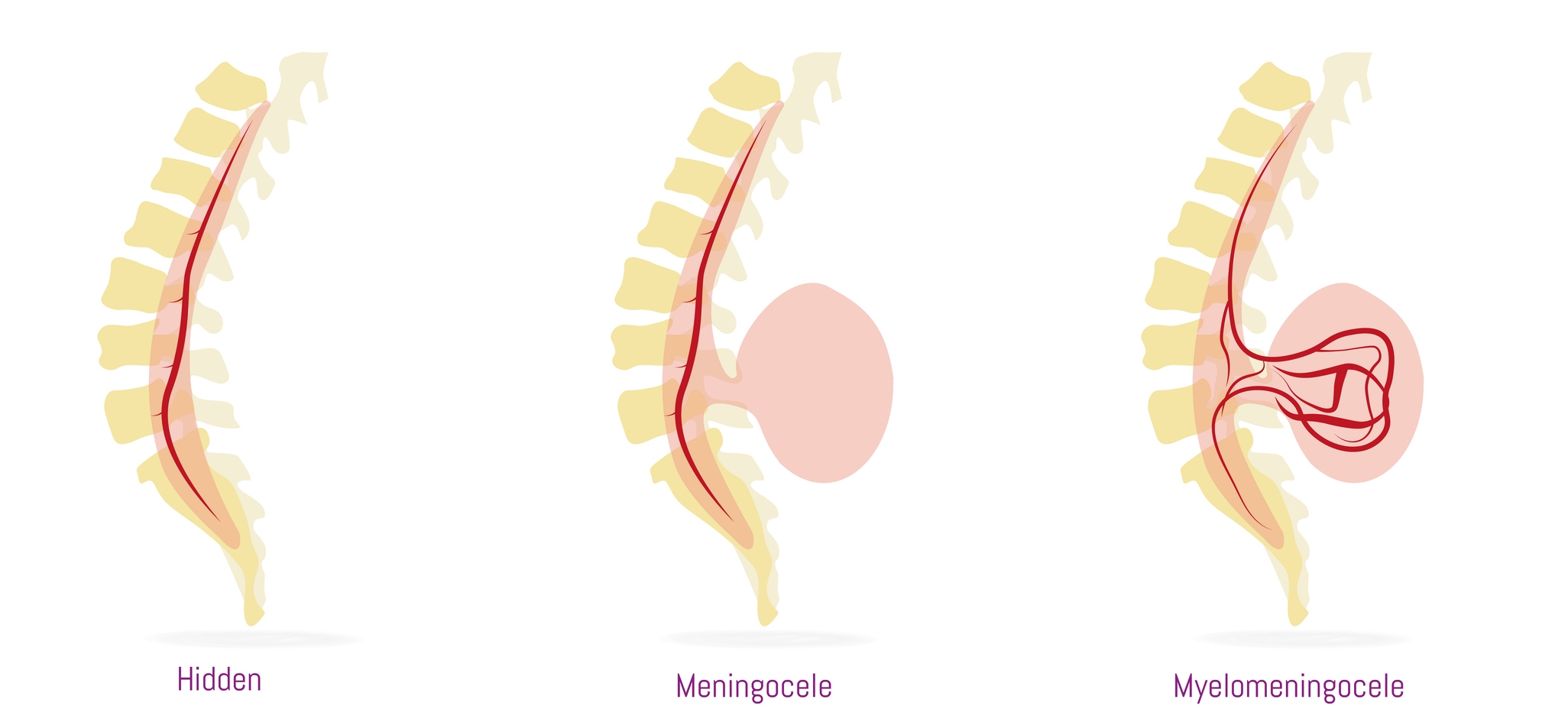
Types of Spina Bifida
Occulta
• Often called “hidden” Spina Bifida
• Usually no visible opening on the back
• May not cause noticeable issues at birth, but some changes can appear later in life
Meningocele
• The protective coverings of the spinal cord (meninges) push through an opening in the spine
• Typically filled with fluid, often no nerve damage
• Can cause minor disabilities, with potential for issues later in life
Myelomeningocele
• The most serious form of Spina Bifida
• Both the meninges and spinal nerves come through the spinal opening
• Causes nerve damage and more severe disabilities